• Where we are now

    September 11, 2023
    The Present
    Where we are now

    Hello, whoever might be out there reading this.

    When I started this blog back in 2017, I was so determined to extend my grandpa’s family history back as further than my grandparents were able to. I had notes from their conversations with relatives about people who had died decades before, murky recollections from their own memories, and a random collection of photos of people but no indication of who they might be. I was so committed to putting together as much information as I could.

    I have made a lot of progress since 2017 and even since I last updated this blog in 2019. I’ve been able to make contact with several people from different branches in my family and found some documents from my grandparents research decades ago that had been forgotten. There’s also been a lot of life that has happened in the present, both good and bad. Some of that life forced me to push my genealogy research to the back of my closet. From getting engaged during the COVID-19 pandemic, changing careers, moving house, and going back to school to get a Master’s degree, I didn’t have much bandwidth to focus on the past.

    However, with all of these life changes, I finally feel stable in my personal and professional life. I recently have found myself dipping my toes back in to genealogy. And now? I’m 31 pages into my compilation of research, with hopes to have it ready to be sent out to my relatives by the end of the year. As I go through the process of finishing it up, I will be uploading a few more posts here.

    I still have a lot of blanks I’d like to fill eventually, but I’m proud of the progress I’ve made and I can’t wait to share more!

    Thank you for reading,

    Britt

    5 comments on Where we are now
  • Dragi deda Ivane!

    July 16, 2019
    Coming to Canada

    One of the genealogical treasures that’s been passed down to me over the years is a small stack of letters written in what I’ve been told is Serbo-Croatian, addressed to my great-great-great uncle Ivan Salaj. Most of the letters were translated about 30 years ago with the exception of three. two of which are from Sremska Mitrovica and one from Canada.

    When Nikola and his family came to America, they were joined by Ivan. About 20 years later, they were joined by their sister-in-law Tereza and her two children Franjo and Maria Salaj. Tereza’s husband Hajnrik was presumed to have died while serving with the Croatian army in World War II. Tereza and her children would soon move to Canada, where her son Franjo would meet his wife, Matilda.

    The families stayed in touch with Ivan over the years and would sometimes visit. One of the untranslated letters is from Matilda to Ivan. I’ve tried to to get it translated multiple time in the seven years I’ve owned it. Most have been through connections I’ve made with the Canadian side of the family.

    I have sent this letter to four Canadian relatives who know the language or know someone who does. I have never heard back from any of them. I gave it to an acquaintance who grew up in Serbia. She said it was essentially Ye Olde English so she couldn’t read it but she would give it to her father to translate.  Again, my follow up messages were not answered. I have sent this letter to 4 separate strangers I came across while tracing my family line who were very responsive and willing to translate it, all who stopped contact after I sent the letter.

    It sounds like it’s cursed, but I still want to know.

    I’ve gotten several quotes from different university departments to have the letter translated but they wanted several hundred dollars to do it—hundreds of dollars that I, as a college student, did not have. The most I ever learned about its contents is that they are deeply personal. This, after the translator double checked that I wanted it translated.

    What I admire most about my distant Canadian relatives; after all these years, they’ve held on to where their families came from. They pass down the names, speak the language, and visit the country. I’m jealous of them, and I wish I could read this letter now.

    But, I can’t.

    If you can, please reach out to me through this website. You would have my undying gratitude.

    Matilda Letter-1
    Matilda Letter-2

    5 comments on Dragi deda Ivane!
  • From Helen to Edith

    December 4, 2017
    Branching Out
    From Helen to Edith

    One of the most elusive people in my research has been a man named Michael Kiefer.

    The problem with Mike is that he didn’t leave much of an imprint on documents. I could place him on census records with his parents, but not after. I could verify his military service, but no mention of a spouse. All I had to go on was a thank you card, signed Edith. But all the documents for Mike Kiefer in Aliquippa, Pennsylvania and surrounding areas was paired with Helen. Helen Edith, maybe?

    Nope. The worst part? A lot of people wouldn’t even care–wouldn’t even bother trying to figure it all out because he’s only related to me by marriage. That’s the trouble with step-siblings.

    Mike Kiefer is the step-brother of my great-grandfather George. Mike’s mom married George’s dad after they were both widowed. I’ve seen one picture of Mike, in it he’s smiling with a cigarette dangling from his lips. They’re looking snazzy in front of a yellow house (see: “Salay, Solay, Saly, Salie, Golay”). Plus, a thank you card after Mike’s passing signed by Edith.

    Eventually, I found Michael Kiefer born Dec. 4 married to Helen, and Michael Keifer born Dec. 4 married to Edith. It’s an easy assumption to make that they’re the same person. Helen died in 1959, her only children being two stillborn children. But Mike lived for almost another 20 years, and Edith 20 years after that. This was the timeline I constructed:

    By 1936: Mike and Helen are married

    April 7, 1936: Helen gives birth to stillborn girl

    December 14, 1941: Helen gives birth to still born son

    By 1943: Helen and Mike are divorced (potential relationship damage after two failed pregnancies)

    December 17, 1943: Mike and Edith marry

    September 25, 1959: Helen dies

    December 26, 1976: Mike dies

    November 9, 1997: Edith dies

    That time line, in and of itself, makes sense on face value. But, once I looked closer at the documents I had I realized there was one glaring mistake I had made; a crucial detail I had overlooked. When Helen died in 1959, not only was her last name still Kiefer, but she was marked as married. And Mike was listed as her husband.

    Well, shoot.

    If Helen was still married to Mike, how could he have married Edith 16 years earlier? Of course, it’s possible that they did get divorced and whoever filled out Helen’s death certificate. After all, she’s not listed as widowed so obviously this Michael she was married to is still alive and yet for some reason he isn’t the informant, which typically spouses are. It is also possible that Mike and Edith got married despite Mike’s lack of a divorce.

    Again, I’m not even blood related to this guy and yet I’ve put so many hours trying to figure this mess out. And to be frank, I don’t have a real resolution for you yet. My next step in this mystery is to contact Beaver County, where Mike and Helen would have got married and divorced at and see if they can look up their marriage and, potentially, divorce records.

    Until then, all I have for you is this article that leads tells you no real information.

    You’re welcome?

    No comments on From Helen to Edith
  • A Break From The Narrative

    June 11, 2017
    The Present
    A Break From The Narrative

    I have just come off of the first gap I’ve had in posting these posts. It isn’t that I’ve lost interest in the subject or the blog, but sometimes I just have to take a step back.

    Looking back at my ancestors is more than looking back at a bunch of names photos. One of my favorite aspects is connecting the names to the faces, but it can also cause me a lot of anxiety. I’m a naturally inquisitive person so I make it my mission to find as many details I can about my ancestors. I research and follow their movements so close that I get attached, in a way, to these people I have never met. From their birth to death, I search for everything. And sometimes it just all piles up.

    I’ve always been a nervous person, or maybe anxious is a better word. I’ve also always seemed to surround myself with death, or things related to death. I’ve always loved murder mysteries, I am an avid watcher of Investigation Discovery and true crime documentaries, and true crime podcasts. Along with that goes my genealogy research. My research has brought up some sad material many times. From news articles about my three times great grandfather being electrocuted to death while working to another about my great-great grandmother’s cousins being involved in a car-on-train accident that killed two in the car while the other two were serious injured. Bertha Zelma Smith was only 14 when she died. That article in particular described the anguish the family was feeling in detail. That on top of plane crash deaths, family abandonment, abuse allegations and a mile-long list of illness-caused death for even young children eats away at optimism I held for whatever family group I’m investigating. Coupled with frequent trips to cemeteries, sometimes on a treasure hunt in the last place I knew someone was to have lived, it’s like I’m constantly surrounded by death and depressing statistics. It’s heavy stuff; it’s hard not to see just how fragile life is. It’s hard to not put myself in their place, not to let my anxieties get to me. I stress out, I freak out, and then I take a break and calm down. After 11 years of this, it’s become a routine of mine.

    Maybe it would help if I didn’t get so emotional investided in these people. Maybe I should watch the Animal Planet instead of Investigation Discovery.  I could list maybes all day but I think it would be easier for everyone if I just chill out every once in awhile and focus on my cat and my boyfriend. Because even amongst all of the sad and tragic of the past I have floating in my head there are the positive things I have to hold as well. 

    This weekend, my boyfriend and I went garage sale-ing. I found some Vera Bradley for a steal, a birthday present for my mom, and we managed to find one of those double papasan chair frames for basically nothing. We got lunch with my sister at a new restaurant and then next weekend we’re going to the zoo with my cousin and her beautiful baby girl. My new glasses come in next week. Also, my cat is still adorable. 

    And I’m one step closer to finishing the family book.

    Life is good, the past is the past, and I am going to be okay. 

    No comments on A Break From The Narrative
  • How Common Is My Last Name?

    June 11, 2017
    The Present

    I can count on one hand the number of people in my life I’ve met who have the same last name as me who wasn’t related. In fact, I could count it on just one finger. I knew there were distant relatives in Ohio who shared our last name and I knew, probably, there were some even more distant relatives in Croatia or Serbia with the old spelling of my last name. Surprisingly I have never actually counted. In fact, before I was old enough to enter the world of social media I actually thought we were the only ones. Which is crazy, right?

    I know there are some Salays in Ohio whom I am not related to. I know this because when I was in high school a girl from Ohio also named Brittany Salay added me on Facebook. I can prove now that there is no relation. In my head this always made sense, that my last name would be an uncommon one, so I never really took the time to count.

    There are at least 660 Salays in the U.S. and Canada, and at least 99 Salajs. In Serbia, there are at least 70. I say at least because that is the amount listed in the Serbian White Pages which are in fact in Serbian, so I have trouble reading it. The U.S. alone has 318.9 million and counting. It’s not so crazy I haven’t met any of the other Salays who aren’t related to me. And, knowing how my family’s name changed after a few years in America, who is to say that other Salajs aren’t related to me. Maybe they moved to other countries where their names changed into something else.

    It’s so uncertain. I can’t follow every lead I find in the phone book. I can’t follow leads in languages I don’t understand. For all I know, some of the people I think I’m related to might not even be 100% related (if you get what I mean). But that’s part of the reason I enjoy genealogy so much; not everything I find is certain and sometimes I find information that proves the opposite. Other times, I find exactly what I was looking for. Other times, I find Salajs in Canada or R. Salaj in Serbia. Those are the things that make it worth it in the end.

    No comments on How Common Is My Last Name?
  • I See Dead People…

    April 7, 2017
    Uncategorized
    I See Dead People…

    …Thanks to my grandparents. I love old family photos just as much as the next family historian but I prefer the people in the photos to have been living and breathing at the time. So, you can imagine, when my grandparents pulled out four photos of people posing around caskets I was pretty creeped out. At the time we didn’t even know who was in the photos or why they were significant, just that they were kept and passed down. Since then, however, we’ve been able to identify them thanks to a wedding photo and also a photo of my great grandpa with his full-blood siblings—the only known surviving photo of Nikola and Josephina’s four children. Well, the only one where they’re all living, at least.

    The photo I have featured at the top is from the funeral of Nikola and Josephina’s oldest daughter Marija. Nikola is holding his youngest, John, Josephine in front of them, and my great grandpa George in front of her. Marija, who lived August 15, 1907 until February 7, 1916. Notice: Josephina isn’t in this photo. Marija and her family are flanked by Josephina’s sister and brother-in-law Marija and Jakob Kher. Josephina is absent from this photo because less than a year before the family was taking another family casket photo, only Josephina was still not standing because she was the one they were mourning.

    In a way, the more I know about the Salayj who came before me the sadder I feel. There was so much tragedy that hit them. The misfortune I’ll talk about this time is the series of deaths that hit the Salajs. As I’ve said, Nikola and Josephina came over to America with their two daughters in October of 1912. by April 1915, Josephina had caught tuberculosis and died from it. The following February, their daughter Marija died due to complications from tonsillitis and pneumonia and then that May John, the youngest Salay, died from pneumonia.

    Nikola would remarry in between Marija and John dying to widow Anna Kiefer, who had three children of her own. According to notes my grandparents took, Nikola’s son George said his dad drank frequently. He also said that after the remarriage Nikola’s relationship changed with his daughter Josephine. George said that Anna and Nikola took care of the basic needs of the children but there was no love or nurturing in that house. Josephine would go to live with Marija and Jakob Kher because they did not believe Nikola and Anna were raising her the right way. One could imagine the rifts something like that could cause but apparently things ended up okay because Nikola would build the house Josephine and her husband, Steve Obermiyer, would live in.

    Unfortunately, the remainding family would not all live happily ever after. In 1934 at the age of 24 Josephine would contract tuberculosis and die from the disease. With her, her unborn child also passed away. The two were buried together. While there was no family photo with her casket there is a photo of her in her casket surrounded by flowers.

    Nikola and Josephina’s surviving son, George, and Nikola and Anna’s son Louis both lived long lives and had families of their own, as did Anna’s daughters Mary and Kate.

    Because I don’t want to end this on quite so sad of a note, I’m going to go over who my grandparents and I went identifying the people in these photos. Now, this might get a little confusing. The only photo I don’t have digitized is Josephine’s. Here are Josephina’s and John’s:

    Josefine Majer funeral photo
    IMG_5630

    We knew what Nikola looked like from his wedding photo with his first wife Josephina. Nikola is in all the photos, so that made it easier to narrow down which side of the family they came from.

    John’s was obvious. My grandparents had heard that there was maybe one or two babies that came after my great-grandpa before his mother passed away but the baby’s name was nowhere to be found in their notes. But, we figured, this had to be that baby because we knew when the other three children died. Later, we would find a crude map of a cemetery drawn with the name “John Salay” on it.

    Marija’s was easy as well because, again, we knew when she died and there was just no other option.

    We knew the photo of Josephina in her casket to be either the photo of the adult woman outside in a casket or the one inside. From my grandparents notes, Josephine’s viewing was at her Auntie and Uncle Kher’s house. So, we determined, Josephine had to be the woman in the inside photo because there was a big portrait of Jakob Kher on the wall (we knew what he looked like from his naturalization application). The only problem now is that we can’t identify most of the people in the photos with them. We know Marija and Jakob Kher, we know Josephina’s brother, Franz, is in them along with Nikola’s brother Ivan. We’re pretty sure in John’s baby photo, Anna is on the end with her three children: Katie, Mary, and Mike.

    The rest are a mystery. For now, at least.

    No comments on I See Dead People…
  • Strangers on the Internet

    April 7, 2017
    Uncategorized
    Strangers on the Internet

    When I started this, I thought finding records would be my biggest roadblock. I had no clue how wrong that was until I started tracking down people who are still living to get information from them. One could say I’ve turned into a bit of an amateur internet stalker.

    Most of the people I have talked to that I don’t really have a tangible connection to have been on Ancestry; it’s easy to share details on there because there’s sort of this understanding that you all have the common goal of expanding your tree. That is how I originally got in touch with the Canadian side of my family. Off Ancestry, however, it’s quite a different story. I’ve seen social media for people who are related but so far removed from me that I sometimes didn’t have a name I could give them that I felt confident they could recognize. I have addresses, phone numbers, emails for people who have no clue I exist.

    Now, sometimes I have used this information. I contacted my grandma’s brother through his work email (I have strong doubts he knew who I was before) and I’m also in the process of contacting someone I think might be related to me in Sremska Mitrovica. I’ve contacted other Canadian relatives on Facebook (and have recently heard back from one) but those have mostly gone unanswered. I realized pretty early on that outside of Ancestry it comes of as something of a Nigerian prince scheme. It’s like, “hey, you don’t know me but I think we’re related and I can show you how. But I don’t know everything so please give me info k thanks.” Even to people that I have tangible connections to, people who know people who know me, it was often difficult to get information. And at first I didn’t understand why, but then I realized that of course they’re skeptical about talking to me—I’m basically a stranger to them. 

    Being a stranger in situations like these is a hard thing to grasp. On one hand, I want to say that I’m family, no matter how close we aren’t we’re still related and what’s not to trust? But that is a very naïve thing to believe, and now I’m almost embarrassed by admitting that I had those thoughts. The truth is, whether or not we’re related we still don’t know each other. The question isn’t why wouldn’t they trust me, but why should they? We may be technically family but when it comes down to it I probably know more about my neighbor’s friend’s boyfriend whom I’ve never met. I probably know more about Britney Spears than I do them, and they don’t know much, if anything, about me either. Thus, the real challenge becomes building trust.

    How do I build trust? Mostly, I try to keep the topic on what I already have. I talk about what information I want for the book and what I want for my own personal records. The thing I should do is try to address concerns about sharing information but, alas, I’m not too good at this one. The biggest problem with that is I can’t give people a good reason to share information with me. I know no one has to share information with me but I love it when they do. As I’m writing this, I’m actually thinking of ways I could make people more comfortable talking to me that I’ll probably try in the future.

    In the mean time, this will have to do:

    My name is Britt Salay. I’m one of four kids, I like cats, and I work at both a coffee shop and a TV station. I like cold pizza for breakfast and oatmeal for dinner. I’ve lived in Indiana my whole life and quite like it (except for the manure smell in some of the rural areas). I like to keep my Christmas lights up year-round in my room. I love my boyfriend, I like my car, and I like M&Ms in my popcorn. Most of all, I want to get to know you as a person and I want to share what research I have with you. Genealogy is important to me; it’s one of the only hobbies I picked up that I’ve consistently held on to over the years. I’m trusting, I think I’m funny (don’t ask anyone, take my word for that), and most of all I have very strong opinions on pizza toppings.

    Hit me up, fam.

    No comments on Strangers on the Internet
  • From Salaj to Salay

    April 3, 2017
    Coming to America
    From Salaj to Salay

    Recently I’ve taken it upon myself to try and figure out when, exactly, my family’s last name changed from “Salaj” to “Salay”. I always heard growing up in school that many names got Americanized at Ellis Island. That’s all well and good but there were, at least at one point, plenty of Salajs living in America, some from the same part of the world. Specifically, there was at least one Salaj in Elryia, Ohio which is just two hours away from Aliquippa where my family settled. Not only that, but both Nikola and Ivan spoke English and had to have known how they spell their names as Serbo-Crotian uses both a Cyrillic alphabet and a Latin alphabet. I would then assume that if they could spell their names in the Latin alphabet (which I know from Ivan’s letters that he probably could) then logically they should’ve been able to correct the spelling if there was a mistake. I know my Canadian relatives must have because there are Salajs descended from Hajnrik there today.

    I doubt I’ll ever know why it changed. I can make my assumptions based on oral stories about them but I will probably never know for sure. But I can still figure out about when it changed through documents I have. So, here’s a timeline of the Salaj/Salay transformation. I went through each document I have and looked at what I thought the name looked like, not necessarily what the original indexer thought.

    1909: S.S. Carphathia ship manifest – Salaj

    1912: S.S. President Grant ship manifest – Salaj

    1915: Death certificate for Josephina Salaj – Salie

    1916: Death certificate of Marija Salaj (February) – Salay

    1916: Death certificate of John Salay (May) – Saly

    1917: Ivan Salaj WWI draft card – Salay

    1918: Nikola Salaj WWI draft card – Salay

    1920: U.S. Census – Salay

    1924: West Virginia Marriage Index – Salay

    1930: U.S. Census – Salay

    1940: U.S. Census – Salay

    1942: U.S. WWII draft cards – Salay


    Logically, I feel like I can assume the last name officially changed from Salaj to Salay in between the deaths of Nikola’s wife Josephina and his daughter Mary. On Josephina’s death certificate it has it as “Salie” which could sound phonetically like how I was told my Canadian relatives pronounce “Salaj” (like Sa-lie).

    I wonder if Ivan and Nikola ever discussed something as trivial as how they should spell their name in America.

    No comments on From Salaj to Salay
  • Ivan: The Other Salay

    April 3, 2017
    Back in Yugoslavia, Coming to America
    Ivan: The Other Salay

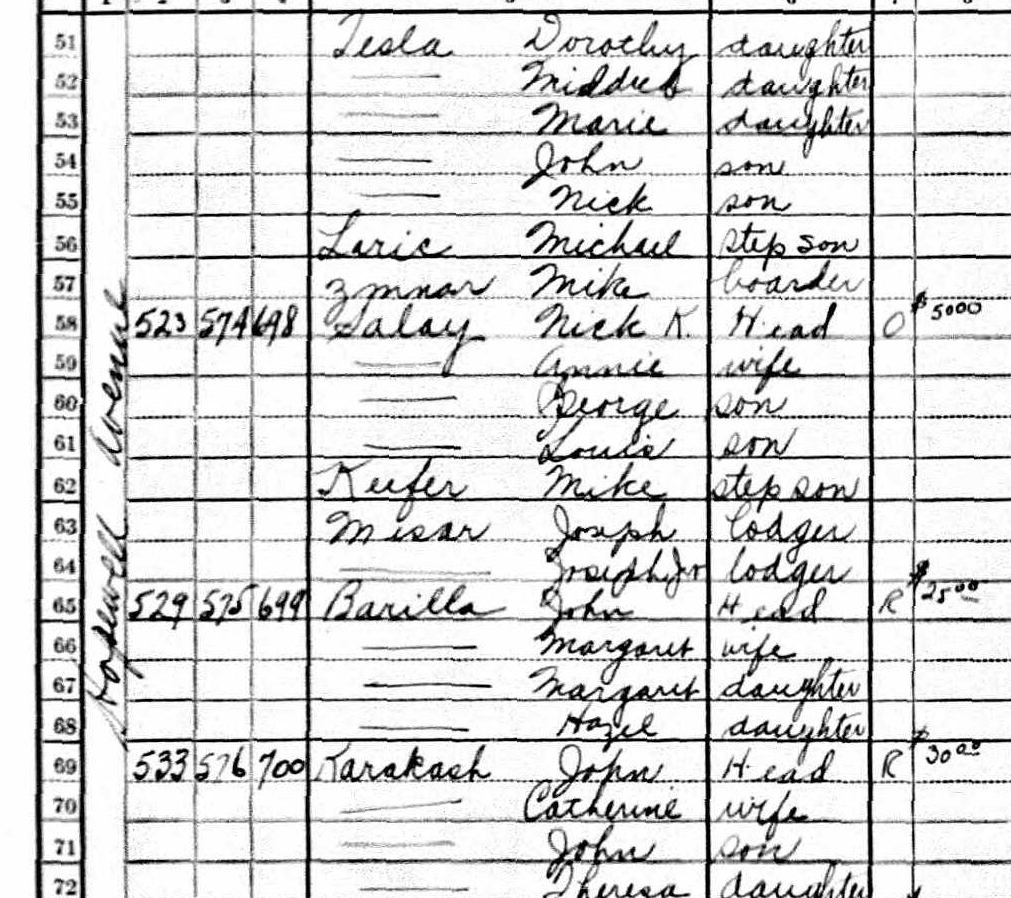
    I wrote about Ivan in my last post and wanted to dig a little deeper into him now. He has been somewhat of a mystery to me, but at least he was a Salaj I knew existed outside of my direct line. In fact, I actually have a lot of information on him. He immigrated to the United States in 1909 and settled in Beaver County, Pennsylvania where his brother Nikola and family would later join him. He lived from 1888 until 1964. Ivan probably didn’t marry until his wedding to Mary (Kopich) Brkich at an age that was relatively late for the times (this according to census data from the U.S. Bureau of the Census) and he never had children.

    Just as Nikola’s would, Ivan’s surname would change once he settled in the States. He seems to have primarily gone by Ivan, however some documents list him as “John Ivan” or “J. Ivan”. I found this somewhat funny when I learned that Google Translate changes “Ivan” to “John” when you enter it in as Serbian to English. I have since taken to calling him John-John in my notes. As my luck would have it, he was not the only John Salay from Yugoslavia in the Midwest. He wasn’t even the only John Salay from that region in Western Pennsylvania. The other Pennsylvania John-John was a real trip too because his wife was named Mary. It was rough distinguishing the two at first but after I figured out that that Ivan pretty much stayed in Ambridge, Pennsylvania from the start things became easier.

    As far as his marriage to Mary (Kopich) Brkich, I can say with full certainty they were married in Wellsburg, Brooke, West Virginia on August 30, 1924. He was 42, she 35. In 1924, the average age of a person at their first marriage was between 22 and 23 years old. Now, I know that Mary had been married previously to Mathew Brkich, who passed away April 21, 1924. I do not have their marriage date so I had to do some math of my own to figure out approximately when they could’ve been married by. Their only child, George, was born in April 18, 1913, and assuming their were married for at least 9 months before he was born and that Mary’s birthday falls in February then I can reasonably conclude that Mary was around 23 at the oldest of her first marriage.

    You might be wondering why this matters to me, or at all even. Back in 2011 I found a ship manifest from August 1909 for the S.S. Carpathia, departing from Fiume and arriving in the Port of New York. That lists an Ivan Salaj who is Slovak and whose closest relative in the country from whence he came lived in Sremska Mitrovica. While that’s all well and good, there are some problems with it, such as it spelling his surname as “Salej” and listing his age as 34 (he would have been 21 in August of 1909). The big thing that holds me back from saying it is without a doubt him is that in the closest living relative portion it looks like he listed a wife. But, that could be for the person above him. That column of the manifest is, typically, so cramped from trying to fit full names and cities that it can be hard to tell what information goes with who. It doesn’t help that the documents are old and in really swoop-y cursive, and are scanned. They can be very difficult to read. I was more inclined to believe it isn’t him, but it is the only manifest I can find that lists and Ivan Salaj and it is about the right time he came over. It would be absolutely wonderful if this Ivan was my Ivan, but I could never convince myself it was. With good reason, considering it is not him.

    In 2015, I found Ivan’s naturalization record from West Virginia. I know without a date it refers to my Ivan because it has his correct name (Ivan J. Salay), his exact birth date, and lists him as a tailor, which I know was his occupation thanks to basically every census I found for him. It has his former residence as Mitrovica. More importantly, it has his immigration information. Ivan actually came over on the S.S. Chicago, departing from Havre, France and arriving in New York on April 15, 1910. I checked, and this manifest is not available online so I will have to do some digging for it through actual records.

    As I said earlier, Ivan was a tailor by trade and is known to have owned a tailor shop in Aliquippam Pennsylvania with his brother Nikola and also a shop in Ambridge. My grandparents had a surprising number of documents on him that they’ve uncovered over the years and while they are very cool, the documents did not exactly connect the dots for me. They had the guest book from his funeral, a photo of him, notes about him they’d taken during interviews with other relatives, the collection of letters, and finally (so far) a copy his will.

    Ivan had some correspondence with his sister, Klava, although from the letters she wrote it seems that he would send her money but would either not write her back often and would not come see her in Srem Mitrovic even though she desperately wanted him to. The first time I read these letters I was under the impression that Ivan was probably not the world’s nicest guy. An unfair assessment to make given that I had never met him and had no real knowledge of his personality aside from the letters, I’ll admit, but it’s hard not to feel like you know a person when you have all of these details on their life.

    I eased my harsh judgement a little when I read the letters written to Ivan from his great-nephew Rudolf. Rudolf was the grandson of Ivan’s brother, also named Rudolf. He initially wrote Ivan to inform him that Klava had died and that since they were essentially the only Salajs left, Rudolf the nephew really wanted to keep in touch. It is unclear to me at this time if Rudolf was aware of his relatives in Canada, but my best guess is that he did not. It isn’t the fact that Ivan kept up a relationship with Rudolf that softened my opinion so much as the fact that Ivan kept the letters at all. He kept these letters from his sister and his great-nephew, usually along with the envelopes. In the case of Rudolf, he also kept pictures Rudolf sent of his wife and son. On some level, I reasoned, he had to care.

    It wasn’t until I was searching newspaper archives that I realized Ivan was probably not the somewhat cold man I imagine him to be. It was much easier to track down information on Ivan’s step-son George Brkich’s family than it was my own. Brkich and his family popped up frequently in Ivan’s funeral guest book and I knew from Ivan’s will that George was named as a beneficiary. Ivan’s will dictated that $1,000 was to go to his great-nephew Rudolph while the rest of his savings were to be split equally among George Brkich and Nikola’s surviving sons George (my great-grandfather) and Louis. I spent some time searching newspaper archives for the Brkich names in the book when I came across a Classifieds ad published in the Beaver County Times on October 22, 1954.

    BCT 10 22 1954

    I’ve found a lot of obituaries and articles on Nikola Salaj’s descendants and George Brkich’s descendants, but only one other time have I come across a separate article over somebody post-death (George Brkich’s wife and children took out newspaper ads multiple times to honor George on the anniversary of his death). Granted, this particular ad from Ivan aimed more towards those who helped them through that difficult time but it still stood out as an anomaly among the Salays.

    I’m going to end this post with Ivan and Mary’s obituaries, both published in the Beaver County Times. Mary’s was published October 18, 1954 and Ivan’s February 13, 1964.
    BCT 10 18 1954
    BCT 02 13 1964

    No comments on Ivan: The Other Salay
  • Mihail Salaj

    April 3, 2017
    Back in Yugoslavia, Coming to America
    Mihail Salaj

    After finding that immigration document that listed Mihail Salaj I immediately called my grandparents and told them. As far as I knew this was the first name we had ever had past my great-great-grandfather Nikola. I scheduled a day to go out and show them the document that I’d found. My grandpa had done some digging in the days before and managed to upstage me on the surprise scale. I might have had a manifest with a name on it, but my grandparents had something even better: an obituary and a few letters.

    The obituary was for Mihail, otherwise known as Mija. It was essentially everything I had been looking for, and it had been lost in a stack of papers for who knows how long. At one point in time, my grandparents hired a professional to travel to Sremska Mitrovica and see if he could dig up some information for them and in my opinion he very much delivered. The letters were written to Nikola’s brother, Ivan, who also immigrated to Pennsylvania. Some of the letters had English translations companions but three were still in Serbian, along with the obituary, and try as we might, we could not find someone who would translate it without charging an arm and a leg. A year later I took my boyfriend with me to their house, and the genealogy records were brought out again. We started talking about renewing our search to find someone to translate them when my boyfriend offers an interesting nugget; he actually knows somebody who speak Serbian.

    I cannot put into words how over-excited I got. I immediately had him ask his friend if she could look at the obituary since it was the smallest and least daunting task. He did, she said yes, and she definitely delivered.

    The obituary not only listed his age and time of death but also what cemetery he was buried in. Most importantly, it had names. Suddenly I had something real to work with. It listed Mihail’s spouse, his five sons (and three of their wives) and his daughter, as well as her husband’s surname. It was hard to tell which wife was married to who, but it was a start. As far as the letters went, they were mostly written to Ivan from his sister Klava. However, there was also a couple letters written from Nikola and Ivan’s great-nephew Rudolf. The one that stuck out the most was a faded letter written in light blue ink. Toronto was written at the top alongside a date and down at the bottom in the prettiest cursive I’ve ever seen was “M. Salaj.”

    If this seems like a lot of information to digest, trust me, I get it. I didn’t even know where to start. There was so much I wanted to try and verify but I had no clue how to do it. In great-nephew Rudolf’s letter he had mentioned his grandfather, who would’ve been Nikola’s brother, as Rudolf Salaj who was killed at war during World War II. The obituary, however, does not list a Rudolf as Mihail’s son. Mihail died in 1934 so Rudolf would’ve definitely been alive.

    Another question nagging at my mind was, who is this M. Salaj in Toronto? I had never heard anything about having Canadian relatives, unsurprisingly given that I did not really know much about the Salays. I decided the best thing I could do was enter all the names in my Ancestry tree and hope that somebody else had at least one of these people in their trees. I lucked out with Nikola’s brother, Hinko a.k.a. Hajnrik. If the obituary was a breakthrough, then Hajnrik was a full on miracle because the next day when I checked me tree there was a hint attached to Hajnrik. He was listed in the tree created by his great-great granddaughter, Carla.

    I messaged Carla and we began sharing information. She too had experienced an enormous amount of trouble finding information on her Salaj ancestors. It was truly amazing when I saw her tree. I had wondered if my line of Salajs had been the only ones to survive this long but it was very apparent at that point how wrong I was. Her tree also answered some of the questions I had. I now knew to pair Hajnrik with Tereza on Mihail’s obituary, and who this M. Salaj from Toronto was. By looking at Carla’s tree, the only person it could be was her great-grandmother and Hajnrik’s daughter-in-law, Matilda. I had tried to get the letter translated after knowing for sure who had written it. The grad student I asked wanted more than I was willing to pay, but did tell me that it was a very, very personal and angry letter.

    If only I could read it.

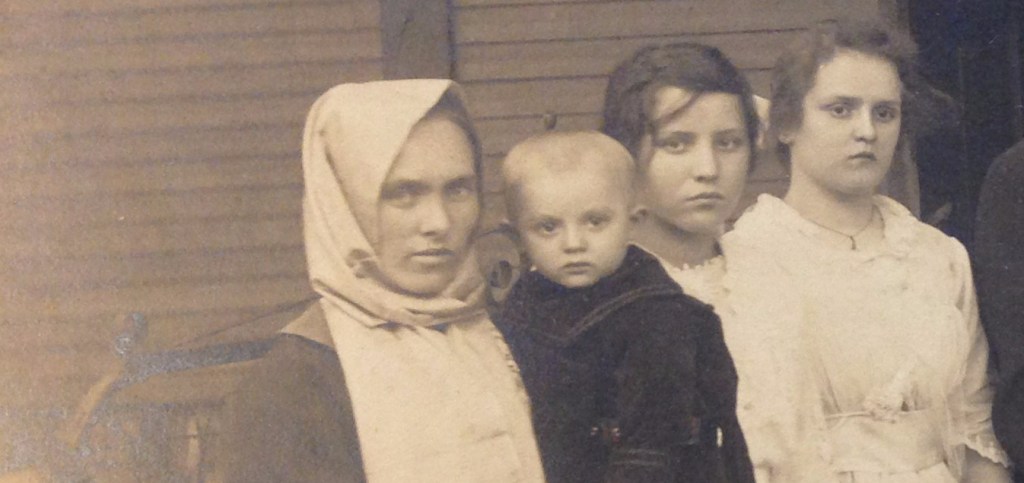
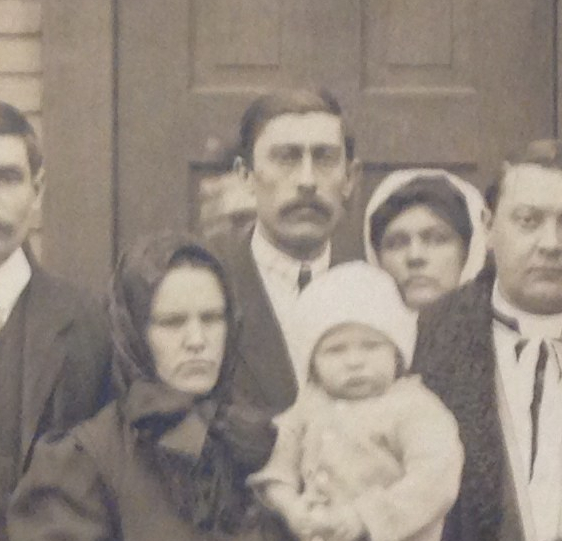
    *Pictured at the top is Mihail and his wife, presumably named Ana, courtesy of Bonnie Salay.

    No comments on Mihail Salaj
1 2
Next Page

Start a Blog at WordPress.com.

The Search for Salaj

Finding my family and writing a book

  • Home
  • About
  • Contact
 

Loading Comments...
 

    • Subscribe Subscribed
      • The Search for Salaj
      • Already have a WordPress.com account? Log in now.
      • The Search for Salaj
      • Subscribe Subscribed
      • Sign up
      • Log in
      • Report this content
      • View site in Reader
      • Manage subscriptions
      • Collapse this bar